January 15, 2026 at 10:40 p.m.
Jay County Board of Zoning Appeals
Exceptions approved
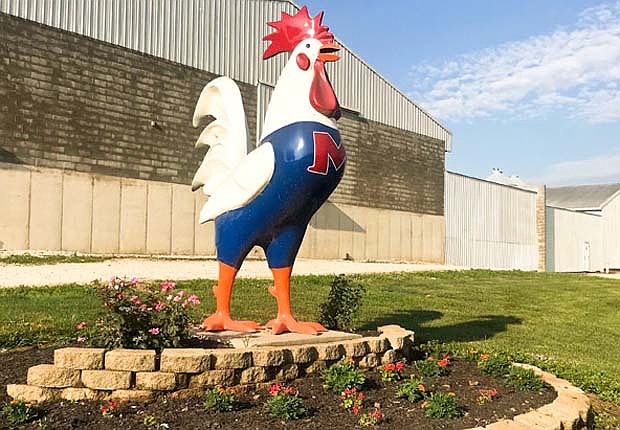
Three projects, including construction and operation of a biochar facility, received the nod from the county zoning board to move forward.
Jay County Board of Zoning Appeals approved special exceptions Thursday for the biochar facility and a feed mill at Minnich Poultry and a mini barn business for Chris Schwartz.
All three require special exceptions from the board because they do not fall under the guidelines of typical agricultural use.
The only request that received any public comment, either in writing or during Thursday’s public hearing, was the biochar facility. It involves a process that Minnich officials say will reduce odor, pests and manure volume by turning manure into biochar, a charcoal-like soil additive.
John Hemmelgarn, Jay/Portland Building and Planning director, explained that his office had received questions about the Minnich facilities after they came up for tax abatements in May 2025.
He noted that there was discussion about a road use agreement, which would identify what roads are being used during the construction of the facilities and requirements for repairing them if there is any damage. Jay County Commissioners, after consulting the county highway department, recently decided a road use agreement is not necessary for the project.
The U.S. Department of Agriculture’s Agricultural Research Service defines biochar as black carbon produced from biomass sources for the purpose of transforming the biomass carbon into a more stable form. Marge Reier of Minnich Poultry noted that it can be used as a soil amendment product — something added to soil to improve how the soil works, not necessarily to “feed” the plant directly.
Reier explained that manure is one of the substances that can be used to make biochar. She said the process involves first drying manure to a point where it is dry enough to burn. It then goes through a second machine that involves extremely high temperatures, with the manure becoming fuel for the process. Through the process, the manure reduces in volume and becomes biochar, which Reier described as similar to charcoal but in powder form.
Minnich, which has been in operation since 1977 and has nearly 4 million laying hens and produces nearly 3 million eggs per day, is working with AgroNet Zero on the facility.
She said the two main goals of the facility — it would be located on the west side of the Minnich property off of county road 800 South — are to reduce flies and other pests that come with livestock and to reduce the volume of manure for easier transport.
Board member Kaleb Hemmelgarn asked about tax credits for carbon dioxide reduction. Steve Reier, Marge’s husband, said Minnich will pursue tax credits, if available, but that they are not the prime driver for the new facility.
Brian Link and Adam Muhlenkamp both had questions, with Muhlenkamp expressing concern about smell.
The Reiers responded that because of the extremely high temperatures there is no smell from the burning process. Any smell, they said, would come from the drying process. In order to mitigate that, the air is put through a wet scrubber and a biofilter. Marge Reier added that the facility will be monitored for air quality through Indiana Department of Environmental Management.
Muhlenkamp continued to express skepticism that there would not be an odor.
Link indicated that his questions were addressed during the Reiers’ presentation, but said he would have liked to have seen a sample of the end product.
Board members also had questions about noise, the source of the manure and truck traffic. The Reiers said there is not expected to be additional noise, that manure used in the process will come from on-site at the Minnich facility only and that it should lead to a reduction in traffic.
Board member Marla Lutes also asked about other such facilities in the state. The Reiers said they believe there is only one other in the Seymour area. (They visited that facility and one in Pennsylvania as part of their research process.)
Patti McLaughlin, assistant director of the building and planning department, noted that Minnich Poultry has received the necessary Indiana Department of Environmental Management permits and will have to follow state guidelines.
The board approved the special exception request on a 3-1 vote with Steve Ford, Angela Paxson and Hemmelgarn in favor while Lutes voted against.
Marge Reier noted that the new feed mill, to be located at the intersection of county roads 300 North and 800 East, would replace a current mill that is nearly 50 years old. (Its entrance would be on county road 800 East.) She said the project has been in the works for nearly 10 years. The new facility will grind and mix the same amount as the current mill — it would have a capacity of about 4,000 tons in an eight-hour shift — and will only be used for feeding Minnich Poultry layers and pullets.
The facility would include receiving bays and liquid and corn storage.
Answering questions from board members, the Reiers said truck traffic is not expected to increase. The project is expected to take 1.5 years to complete, with an estimated start date of this summer.
Schwartz requested an exception to allow him to construct and sell mini barns on his property at 7609 N. 500 West. He explained that he has been in construction for almost a decade and wants to work at home.
Hemmelgarn said Schwartz has enough acreage and a barn for construction. He suggested approval.
Board members clarified that Schwartz meets the required setbacks. They approved his special exception request unanimously.
In other business, the board:
•Re-elected Hilfiker as chair, Paxson as vice chair and Ford as secretary. Also appointed Patricia McLaughlin as recording secretary.

Top Stories

9/11 NEVER FORGET Mobile Exhibit
Chartwells marketing
September 17, 2024 7:36 a.m.